Last updated: July 14, 2026Service area: Zanesville & Muskingum County
Always availableCalls answered 24/7
Local service coverageWork handled within county requirements
Upfront pricingClear quote before work begins
Direct answer
What does septic tank repair actually involve?
Septic tank repair means finding and fixing the specific failed component, rather than assuming the whole system needs replacing.
A septic system contains several parts that can fail independently: the tank, inlet and outlet baffles, effluent filter, pump, distribution box, connecting pipes and drain field. The price and difficulty depend on which part has failed and how long the problem has been developing.
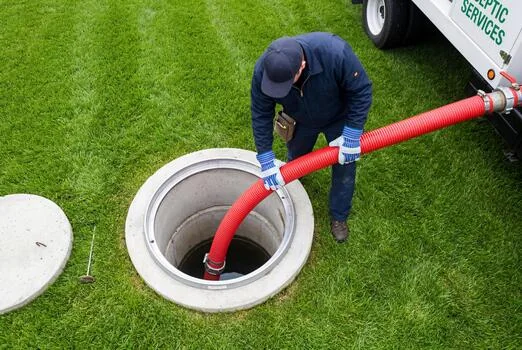
The first step is a proper diagnosis. That may involve opening and pumping the tank, checking the baffles and filter, testing a pump, inspecting the distribution box or using a camera to inspect a line. A precise diagnosis helps avoid unnecessary excavation and makes it possible to quote the right repair.
Most septic problems are targeted repairs. A worn baffle, clogged filter, failed pump or cracked lid can often be fixed for far less than replacing an entire system.
Typical repair costs
What are the most common septic repairs, and what do they cost?
Minor component repairs can cost a few hundred dollars, while damaged lines and drain field work can cost several thousand. These are broad 2026 planning ranges, not a quote.
Effluent filter cleaning or replacement Keeps solids from entering the drain field.$200-$300
Baffle repair or replacement Stops solids escaping through the tank outlet.$150-$900
Cracked tank lid or new riser Repairs unsafe access and can bring access to ground level.$150-$500+
Pump repair or replacement Common on mound and pressure-distribution systems.$250-$1,300
Distribution box repair Restores even flow across the drain field.$500-$1,500
Root intrusion removal Clears roots from pipes, tank connections or lines.$600-$1,600
Pipe or lateral line repair Repairs cracked, shifted or collapsed piping.$1,500-$5,000
Drain field repair or rejuvenation Varies greatly with soil, access and the failed area.$1,000-$5,000+
Access, tank depth, soil, permits and the extent of damage all affect the final price. A firm quote should follow an inspection, not a guess over the phone.
Repair or replace?
How do I know whether my septic system needs repair or replacement?
Repair makes sense when the failure is contained to one component. Replacement becomes more likely when the tank or drain field is structurally failing.
A repair is usually appropriate when:
A baffle, filter, lid or riser has failed
The pump has stopped working
The distribution box has cracked or shifted
A specific pipe or connection is damaged
The tank itself remains structurally sound
These targeted fixes often cost hundreds to a few thousand dollars and can add many useful years to an otherwise healthy system.
Replacement may be the better value when:
A concrete tank has major cracks or buckled walls
An older steel tank has corroded through
The system repeatedly fails after previous repairs
The drain field no longer accepts wastewater
The system is badly outdated or improperly sized
A proper inspection should explain what failed, whether it can be repaired safely and what the likely remaining life of the system will be.
Do septic repairs need a permit in Muskingum County?
Minor component work may not require the same approval as an alteration, but work that changes or replaces the system must follow Ohio and county requirements.
Household sewage treatment systems in Ohio are regulated under Ohio Administrative Code Chapter 3701-29. Local permitting, inspections and enforcement are handled by the Zanesville-Muskingum County Health Department.
Alterations and replacements should be completed by a registered installer, with required inspections completed before excavated work is covered. Before digging, buried utilities must also be marked through Ohio's utility notification process.
Immediate steps
What should I do if my septic system is backing up right now?
Stop adding water immediately. Do not flush toilets, run laundry, use the dishwasher or take long showers. More water can force additional wastewater into the house or onto the ground.
Keep children and pets away from any sewage outside. A backup may be caused by a full tank, blocked filter, failed pump, damaged line or drain field problem, and the difference cannot be confirmed without checking the system.
Frequently asked questions about septic tank repair
How much does septic tank repair cost in Zanesville?
Most septic repairs fall between about $600 and $3,000. Minor component repairs such as filters, baffles and lids can cost about $150 to $500. Damaged pipes, excavation and drain field work can cost considerably more. The final price depends on what failed, access and how much damage has occurred.
Can a septic tank be repaired, or does it always need replacing?
Most problems can be repaired. Baffles, filters, pumps, lids, distribution boxes and pipes can usually be fixed individually. Replacement is more likely when the tank is structurally damaged, an older steel tank has corroded through or the drain field repeatedly fails.
How long does a septic repair take?
Many common repairs can be completed in one visit after the tank is accessed and diagnosed. Excavation, distribution box work and drain field repairs may take longer and can require permitting and a county inspection.
Do I need a licensed contractor to repair my septic system?
Work that alters a household sewage treatment system must follow Ohio and Muskingum County requirements. Using a registered, insured septic professional also protects you from unsafe work and the hazardous gases found inside septic tanks.
Will homeowners insurance cover a septic repair?
Policies usually do not cover failures caused by age, wear or neglected maintenance. Some policies may cover sudden accidental damage, such as a vehicle crushing part of the system. Coverage depends on your policy and the documented cause.
How long should a septic system last?
A properly maintained system commonly lasts 20 to 40 years. Concrete tanks often last longer than steel tanks. Regular pumping, sensible water use and keeping vehicles away from the tank and drain field all help extend system life.