Discuss the property and project
Confirm whether this is a new build, a failed-system replacement or a major alteration, then review bedrooms, expected use, access and known records.
New systems & replacements
Building a home or replacing a failed system? Get a clear quote and help through planning, permitting, excavation, installation and final inspection.
Direct answer
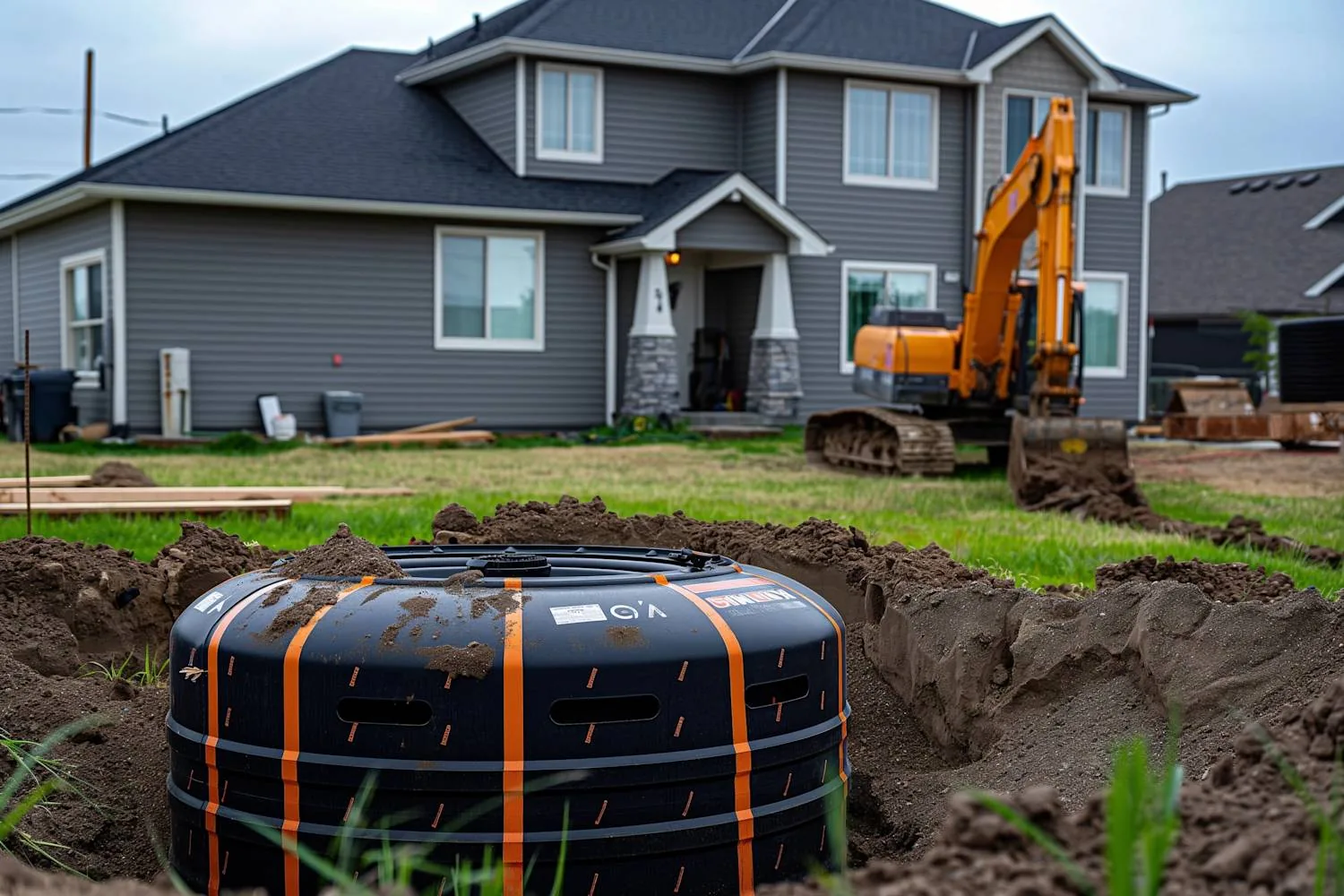
A proper installation starts with the property, not the tank. The soil, slope, available space, setbacks and expected wastewater flow determine which system can be approved and where it can go.
The project normally includes a site and soil evaluation, an approved system design, local permitting, utility marking, excavation, tank placement, inlet and outlet piping, drain field construction, required pumps or controls, inspection and careful backfilling.
For a replacement, the old system also has to be handled safely. Depending on the approved plan, that may mean pumping, disconnecting and properly abandoning the failed tank or removing damaged components before the new system is connected.
The right system is site-specific. A tank cannot simply be selected by price and placed wherever there is room. The approved design must match the home's expected flow and the property's soil conditions.
From plan to final grade
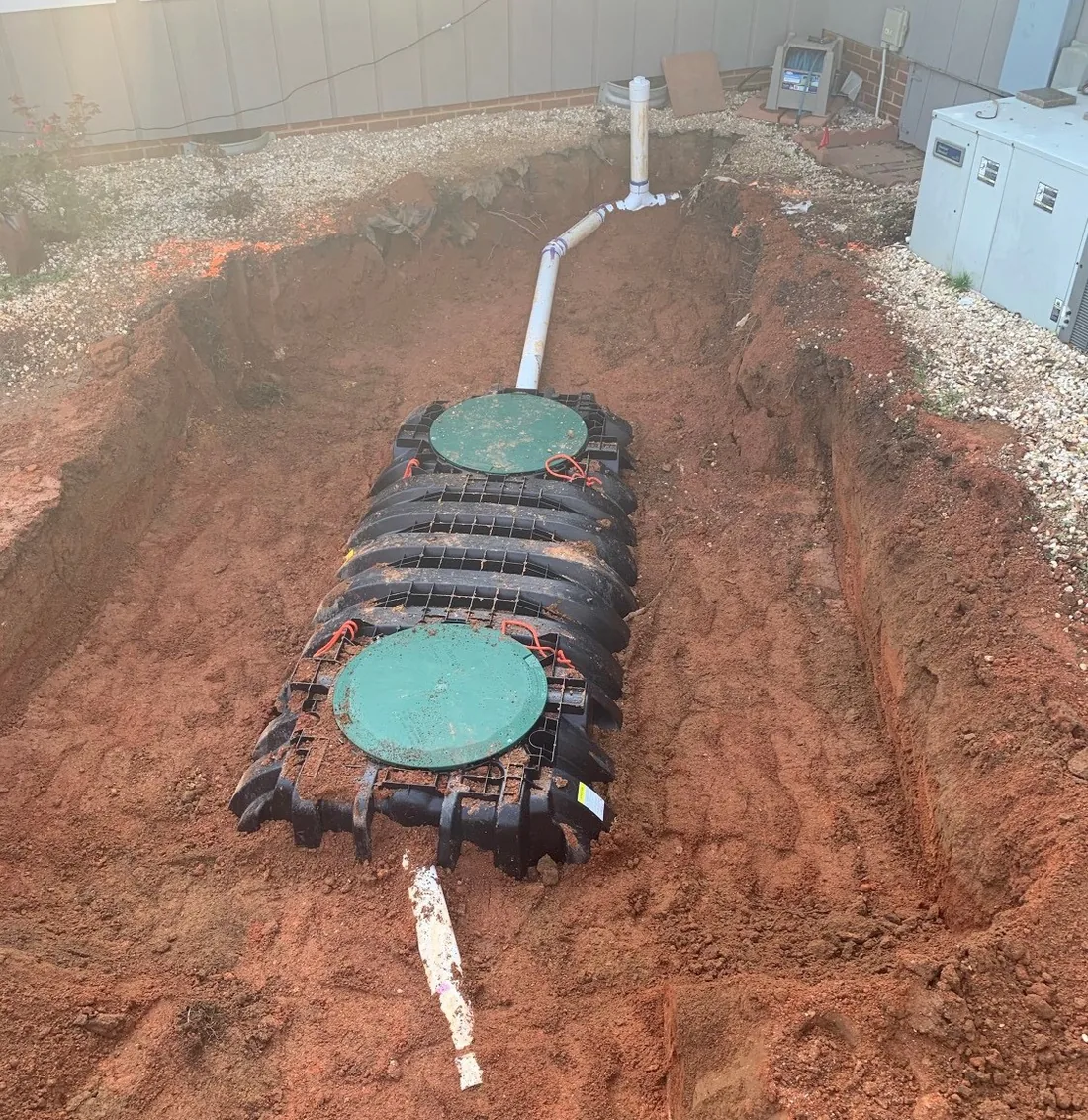
The physical excavation is only one part of the job. A complete installation moves through planning, approval, construction and inspection in a controlled order.
Confirm whether this is a new build, a failed-system replacement or a major alteration, then review bedrooms, expected use, access and known records.
Identify suitable treatment areas, slope, drainage, setbacks, soil limitations and space for the approved system and future access.
Select the tank capacity, treatment method, distribution approach and drain field layout that fit the site and expected wastewater flow.
Submit the required local paperwork and arrange utility marking before excavation begins.
Set the tank on a stable base, connect piping, build the treatment or dispersal area and install any pump, alarm or control equipment.
Complete required inspections before covering the work, then backfill carefully, grade the area and explain future maintenance needs.
System selection
The simplest suitable system is usually preferred, but the site's soil and elevation may require pressure distribution, a mound or additional treatment.
Wastewater moves from the tank to a soil absorption area by gravity. This is often the most straightforward option when the property has suitable soil, slope and space.
A pump doses wastewater across the dispersal area more evenly. It may be used when gravity alone cannot deliver the required distribution.
Suitable treatment soil is placed above the existing grade when shallow soil, seasonal water or restrictive layers limit a conventional field.
Additional treatment equipment may be required on constrained properties. These systems can include pumps, controls, alarms and more frequent operating maintenance.
Installation cost
A conventional installation or replacement commonly falls around $8,000 to $20,000 or more. Difficult soil, pumps, advanced treatment, long pipe runs and extensive restoration can push the total higher.
No responsible installer can confirm an exact figure from tank size alone. The approved design, soil conditions and excavation requirements control the real cost.
Local approval
Yes. A new household sewage treatment system, replacement or significant alteration must follow Ohio rules and the local health department's permitting and inspection process.
The system must be designed for the property, installed by a properly registered professional and inspected at the required stages before the work is covered. Utility lines must also be marked before excavation.
Starting with the permit and design protects the homeowner from paying for a system that cannot be approved. It also creates records that matter for future maintenance and property sales.
Repair or replace?
Replacement is usually considered when the tank or drain field has failed beyond a durable repair, the system is unsafe, or the existing design no longer serves the property.
A diagnostic visit should explain whether the failure is limited to a repairable component or whether replacement provides the safer long-term value.
Installation questions
A conventional septic system commonly costs about $8,000 to $20,000 or more. Soil conditions, system design, excavation, tank size, drain field requirements, pumps, permits and restoration all affect the final price.
The physical installation often takes several working days. The complete project can take longer because the site evaluation, design, permitting, scheduling and required inspections happen before and during the excavation.
Tank and system sizing are based on expected wastewater flow, commonly connected to bedroom count and occupancy assumptions, along with local design requirements. The approved design determines the correct capacity for the property.
Sometimes, but not always. Failed soil, current setback rules, access or damage may make the existing location unsuitable. A site evaluation determines whether the current location, a reserved replacement area or another part of the property can be used.
Yes. New systems, replacements and alterations must follow Ohio household sewage treatment system rules and the local permitting and inspection requirements administered through the Zanesville-Muskingum County Health Department.
Often yes, but water use may need to stop while the old system is disconnected and the new system is connected. The expected interruption should be explained before work begins.
A well-designed and maintained septic system commonly lasts 20 to 40 years. Regular pumping, sensible water use and keeping vehicles and deep-rooted plants away from the tank and drain field help extend its life.
Plan your system
Call to discuss the property and what is happening, or send a few details below. Calls are answered 24/7.